
Why Snowblower Disposal Is Trickier Than It Looks
That old single-stage snowblower sitting in the back of your garage might look like a straightforward haul-away job. But the moment you factor in the gasoline in the tank, the motor oil, and the mix of steel and aluminum parts, you’re dealing with something most municipal curbside programs flatly won’t accept.
Many cities classify gas-powered equipment as hazardous material when fuel is present. That means your standard bulk pickup day — if your area even offers one — likely won’t cover it. Before you drag it to the curb, it’s worth knowing your actual options.
Can You Donate or Sell a Used Snowblower?
If the machine still runs, selling it is genuinely your best first move. Facebook Marketplace and Craigslist move working snowblowers fast, especially in the fall. A functional two-stage unit in decent shape can fetch anywhere from $75 to $300 depending on brand and condition.
Donation is trickier. Most Habitat for Humanity ReStores don’t accept gas-powered outdoor equipment, and Goodwill won’t take it at all. Some community tool libraries or vocational programs accept working small engines — worth a quick call to local organizations before hauling it across town.
If it doesn’t run? Selling becomes a harder sell, and donation centers will almost certainly pass. That’s when your options shift toward recycling or removal.
Recycling Options Worth Exploring
Scrap Metal Yards
A snowblower is mostly steel with some aluminum components — both recyclable. Local scrap yards will often take it, but there’s a catch: the fuel and oil must be drained first. Many yards won’t accept it with any gas or oil remaining, and they’ll turn you away at the gate if they smell fuel.
Once drained, you might even get a few dollars back based on current scrap metal prices, though don’t expect much — a typical snowblower nets $10–$25 in scrap value.
Small Engine Recycling Programs
Some municipalities run small engine or power equipment drop-off events, especially in spring. Check with your local waste management authority or county website. States with stricter emissions regulations sometimes fund these programs specifically to get old gas-powered equipment off the streets.
Retailer Trade-In Programs
Home Depot and some independent equipment dealers occasionally run trade-in or haul-away promotions when you purchase a new machine. It’s not guaranteed, but worth asking when you’re shopping for a replacement.
When Junk Removal Is the Right Call
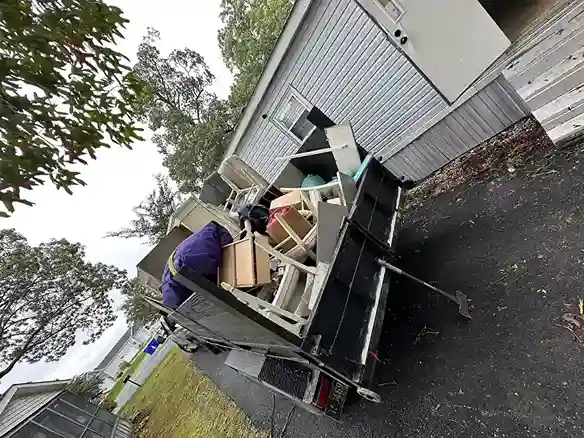
If you don’t have a truck, don’t want to drain fluids yourself, or you’re clearing out a garage full of other stuff at the same time, hiring a junk removal service is often the most practical choice.
A professional crew will load it, haul it, and handle the sorting on their end — whether that means scrap recycling or proper disposal. You’re paying for convenience and compliance, not just muscle.
Cost-wise, most junk removal companies price by volume. A snowblower alone typically falls into a minimum load fee, which usually runs between $75 and $150 depending on your area. If you’re bundling it with other items — old appliances, garage clutter, yard debris — the per-item cost effectively drops. For a full breakdown of what to expect, this guide on junk removal service pricing covers it well.
If you’re in an area with strict bulk pickup limits, like Alameda County, local pickup restrictions make professional removal even more worth considering.
How to Prep Your Snowblower Before Pickup or Drop-Off
- Drain the gas tank completely. Use a hand siphon pump and dispose of fuel at a local hazardous waste facility — never pour it down a drain.
- Run the engine dry if possible after siphoning to clear residual fuel from the carburetor.
- Check for oil leaks and wipe down the exterior so it’s easier to handle and transport.
- Remove any attachments like cabs or drift cutters — these can be scrapped or sold separately.
- Call ahead to confirm whether your scrap yard, drop-off site, or junk removal company has any specific requirements.
A little prep work upfront saves you from a wasted trip or a rejected load. Most of it takes under 30 minutes and makes the whole process go smoother for everyone involved.